Article · · By Innam Dustgir
Reference Check Questions That Get the Truth
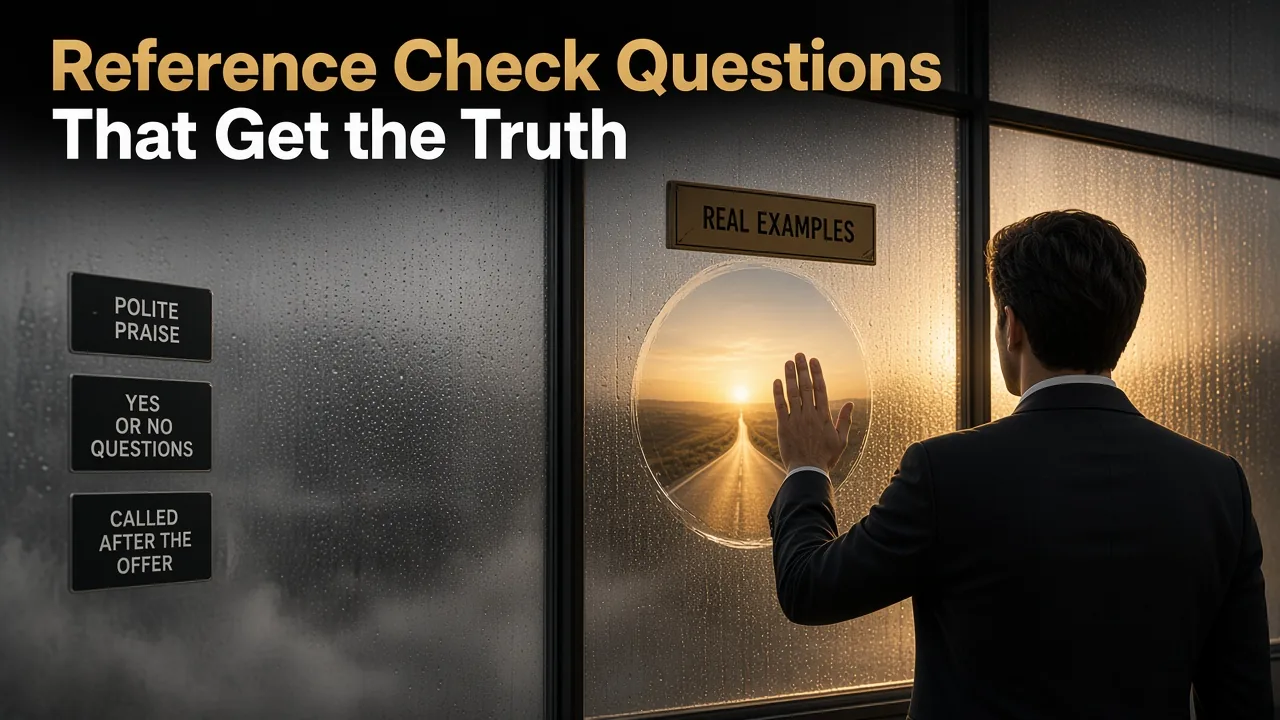
Most reference calls end the same way. The candidate was great, a team player, a hard worker, and you would be lucky to have them. You hang up feeling reassured and knowing almost nothing new. The problem is rarely the reference. It is the reference check questions we ask, and the moment we choose to ask them.
For a senior or central role, the reference call is one of the few chances to see the person through the eyes of people who worked with them every day. Treat it as part of the decision, not a formality after it.
Why most reference checks tell you nothing
References are polite by design. The candidate chose them. They like the person, they want to help, and they have no reason to say something that might cost a friend a job. That is human, not dishonest.
Then we make it easier for them to stay vague. We ask questions that invite a rating instead of a story. "Was she a good manager?" can only be answered with yes. We call after we have already decided, so we are listening for confirmation, not information. And we keep the call short because it feels awkward to press.
The result is a process that looks careful and filters out almost nothing.
How to do a reference check that is worth the time
The fix starts before you pick up the phone.
Decide what you need to learn. By the end of interviews you will usually have two or three open questions about a candidate. Maybe you are unsure how they handle pressure, or whether they can lead people more experienced than them. Those doubts become the agenda for every reference call.
Call before the offer. Reference checks before the offer give you room to act on what you hear. Once the offer is made, every answer gets quietly explained away.
Talk to more than one angle. A former manager sees results and accountability. A peer sees how the person behaves without authority. Someone who reported to them sees how they actually lead. Each view shows a different person, and the gaps between them are useful.
Tell the candidate early. Let candidates know you will speak to references, and ask what each person is likely to say about them. How honestly they predict it is a signal in itself.
For a small company this matters more than it does for a large one. One senior hire shapes how a whole team works. It is a decision that is expensive to reverse, the kind I described in how to make decisions faster as a founder, where slowing down for better information is the right call.
Reference check questions that get real answers
The best questions to ask references when hiring ask for examples and make honesty feel safe. These tend to be the most useful:
- What was this person actually responsible for, and what did they deliver themselves?
- Tell me about a decision they made that you disagreed with. What happened next?
- How did they react when a project went wrong or a target was missed?
- Who on their team grew the most under them, and why?
- Where did they need the most support from you?
- If you were building a team tomorrow, what role would you give them, and what role would you not?
- Is there anything I should know that I have not asked about?
For reference check questions for management positions, add one about people: did others want to keep working for this person? A strong leader usually leaves behind people who would follow them again.
The question about which role you would not give them is often the most revealing. It gives a fair reference permission to describe limits without feeling they are damaging someone they respect.
Listen for what is not said
On a reference call, the words are only half the information.
Notice how specific the answers are. Real experience comes with details, names of projects, and what changed. Generic praise with no examples often means the reference does not know the work well, or is choosing not to share.
Notice hesitation. A pause before "yes, I would hire them again" can mean more than the yes. When you hear one, do not push for a confession. Ask a gentler follow-up: "What kind of environment would bring out the best in them?" People are often more open when describing conditions than when describing flaws.
Notice patterns across calls. One lukewarm comment is noise. The same concern from a manager, a peer and a former team member is a pattern you should take seriously.
Backchannel reference checks, used with care
The references a candidate gives you are a starting point. Backchannel reference checks, speaking with people you find through your own network who worked with the candidate, often give a more balanced picture.
They also carry responsibility. Never contact anyone at a candidate's current employer without their agreement, because you could put their job at risk. Keep every conversation confidential. Treat one negative opinion as a question to explore, not a verdict.
In close business communities, including many in Pakistan, people often know each other. That makes it easier to find someone who has worked with a candidate, and it makes discretion even more important.
A reference check is a decision tool
A good reference process does not replace your judgement. It tests it. You go in with specific doubts, you ask questions that require real examples, and you come out either more confident or with a clear reason to pause.
What you learn should also shape the first months if you do hire. If several references said the person needs clear priorities, give them clear priorities from day one. I wrote about setting that up in how to delegate effectively without rework.
If you are hiring quickly because the business is growing fast, remember that adding people does not fix a weak foundation, a point I covered in the risks of scaling too fast.
This piece was prompted by Adi Ignatius's HBR Executive Agenda, Get the Real Story on Your Next Exec Hire, which gathers the questions experienced executives use to get past polite praise. The lesson holds just as well for a founder making a first senior hire.
The best reference check questions do one thing: they make it easy for an honest person to tell you the truth. Ask fewer polite questions and more specific ones, and the call stops being a formality.
Frequently asked questions
What are the best reference check questions to ask?
Ask questions that require examples rather than ratings. Good ones include what the person was personally responsible for, how they handled a missed target, where they needed support and what role you would or would not give them.
How do you do a reference check?
Decide what you still need to learn after interviews, then speak to a former manager, a peer and someone who reported to the candidate. Ask for specific examples, listen for hesitation and look for patterns across calls.
Should you do reference checks before or after an offer?
Before. Checking references before the offer means you can still act on what you learn, and you listen with an open mind instead of looking for confirmation.
What are red flags in a reference check?
Watch for vague praise with no examples, a long pause before saying they would hire the person again, and the same concern raised by more than one reference.
Originally published on LinkedIn